Asunción, Paraguay | An urban green space and public health park

Parque de la Salud

This is a non-profit educational guide to Parque de la Salud. It focuses on the park's location, urban ecology, how to get there, and on-site photos, without bookings, promotions, or commercial endorsements.

Overview

History, background and city context

Parque de la Salud is a patch of public green within Asunción's urban fabric. Its meaning goes beyond trees and paths: it connects health, nature and city life.

Place
A public green space and leisure park in central Asunción
Experience
Tree-lined paths, lawns and gardens, family and community life
City context
Capital of Paraguay, beside the IPS health campus
Best for
Families, walkers, nature watchers and city visitors

Name and origin

Parque de la Salud means 'Park of Health' in Spanish. It exists alongside the health campus of the Instituto de Previsión Social (IPS), Paraguay's social security institute, and was first imagined as a therapeutic green space next to the hospital and clinics—a calm natural environment for patients, companions and recovery.

Role as an urban lung

Asunción sits on the east bank of the Paraguay River in a humid subtropical climate. As the city has densified, parks like this one regulate the microclimate, provide shade and rest, and serve as neighbourhood gathering places.

Civic culture and everyday life

Today the park is made of green areas, paths and open space that host morning exercise, families, dog-walkers and community events. It is both a buffer for the health campus and a shared civic living room, expressing the public idea that health belongs to more than the hospital.

Overview

Nature and ecology notes

Read this urban green through three dimensions: vegetation, city wildlife and microclimate.

Trees and shade

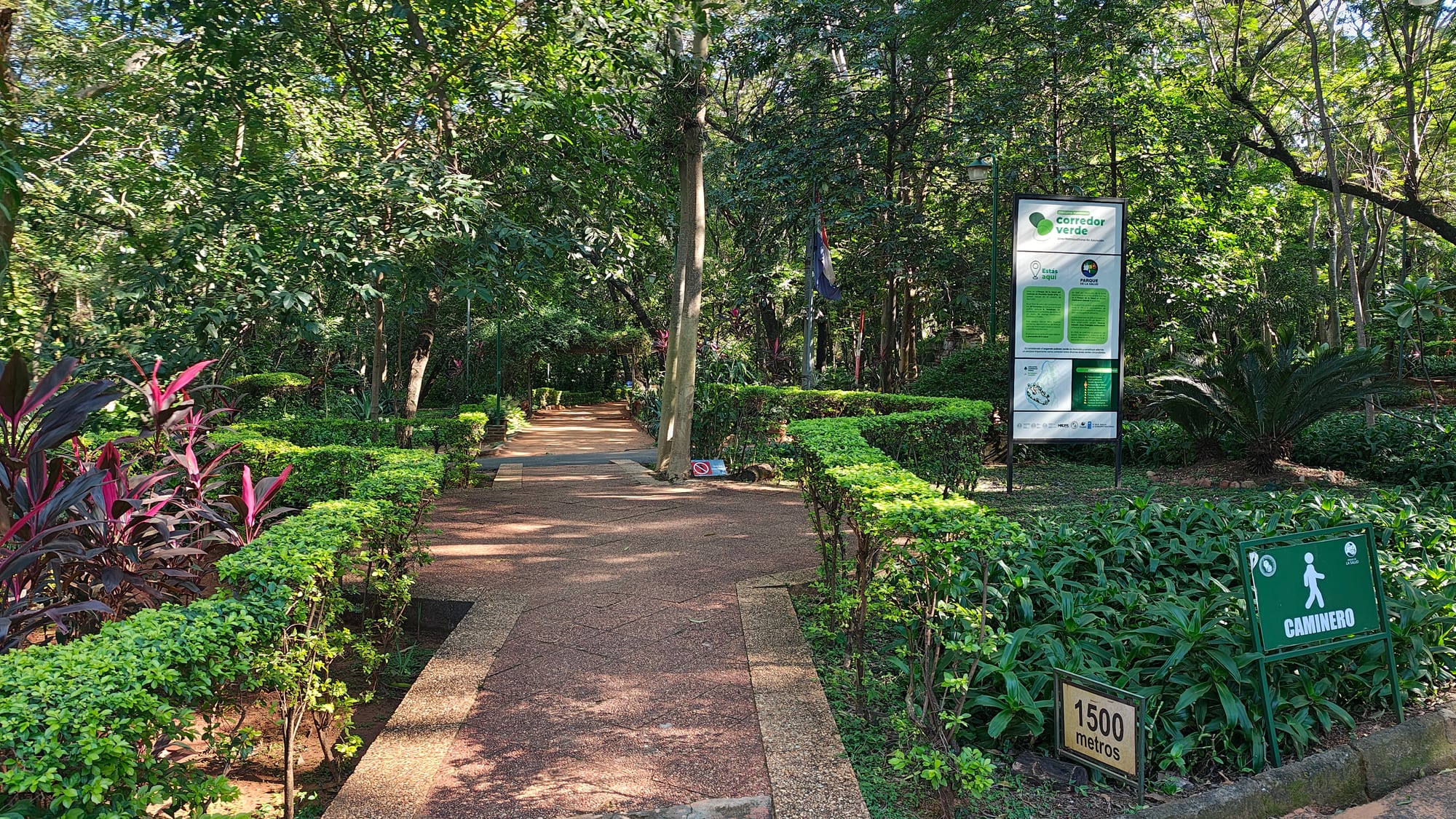
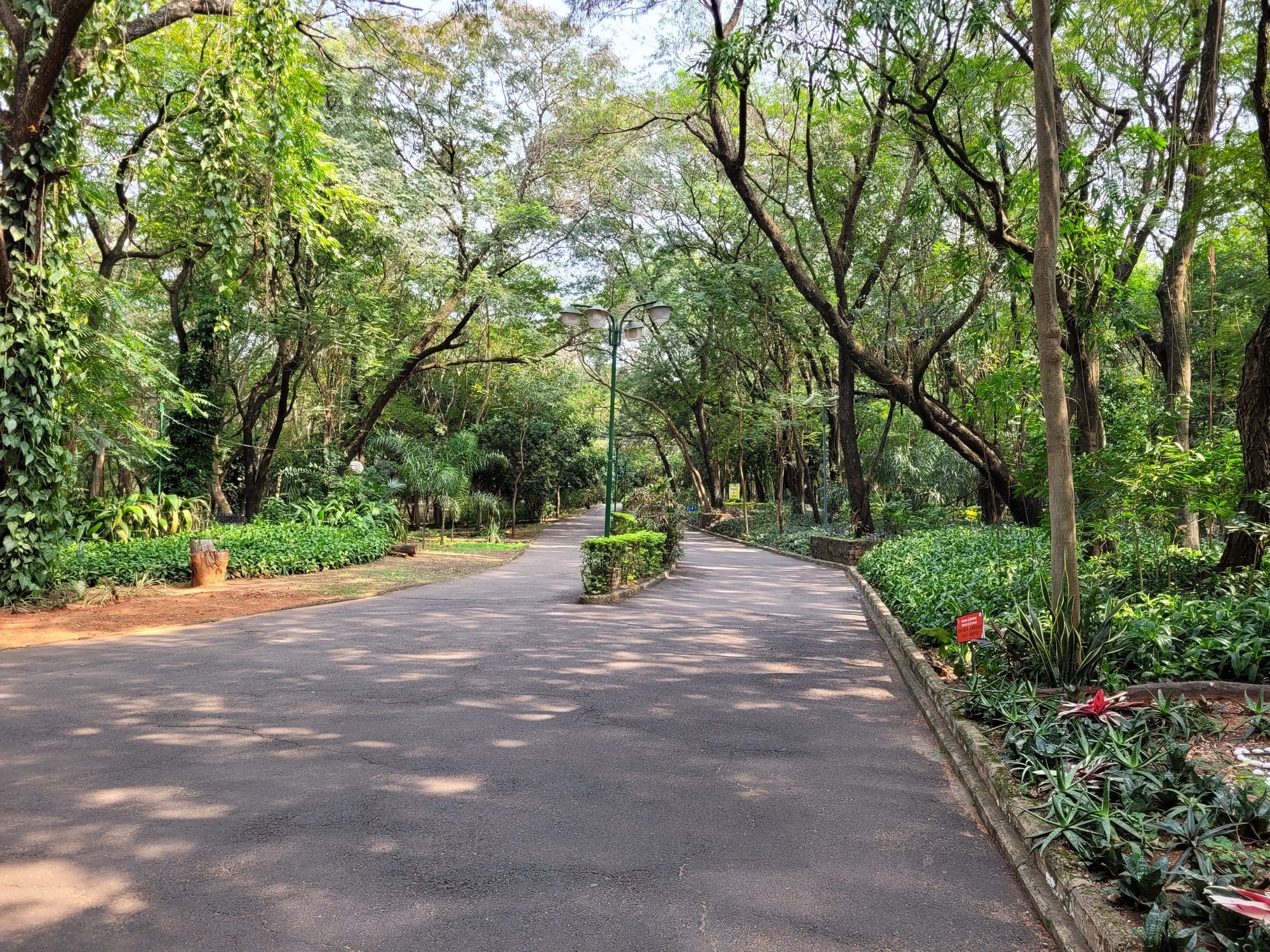
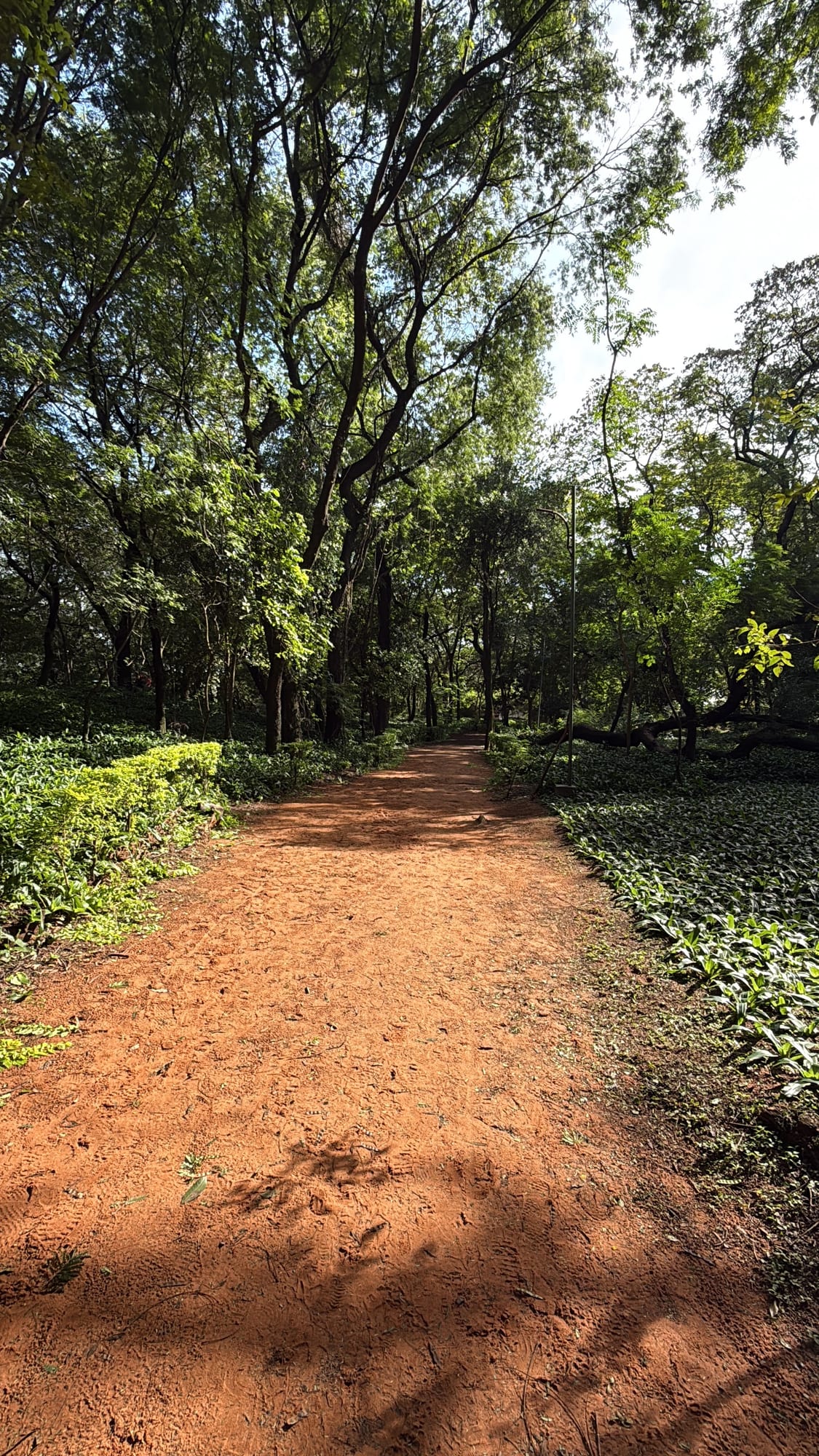
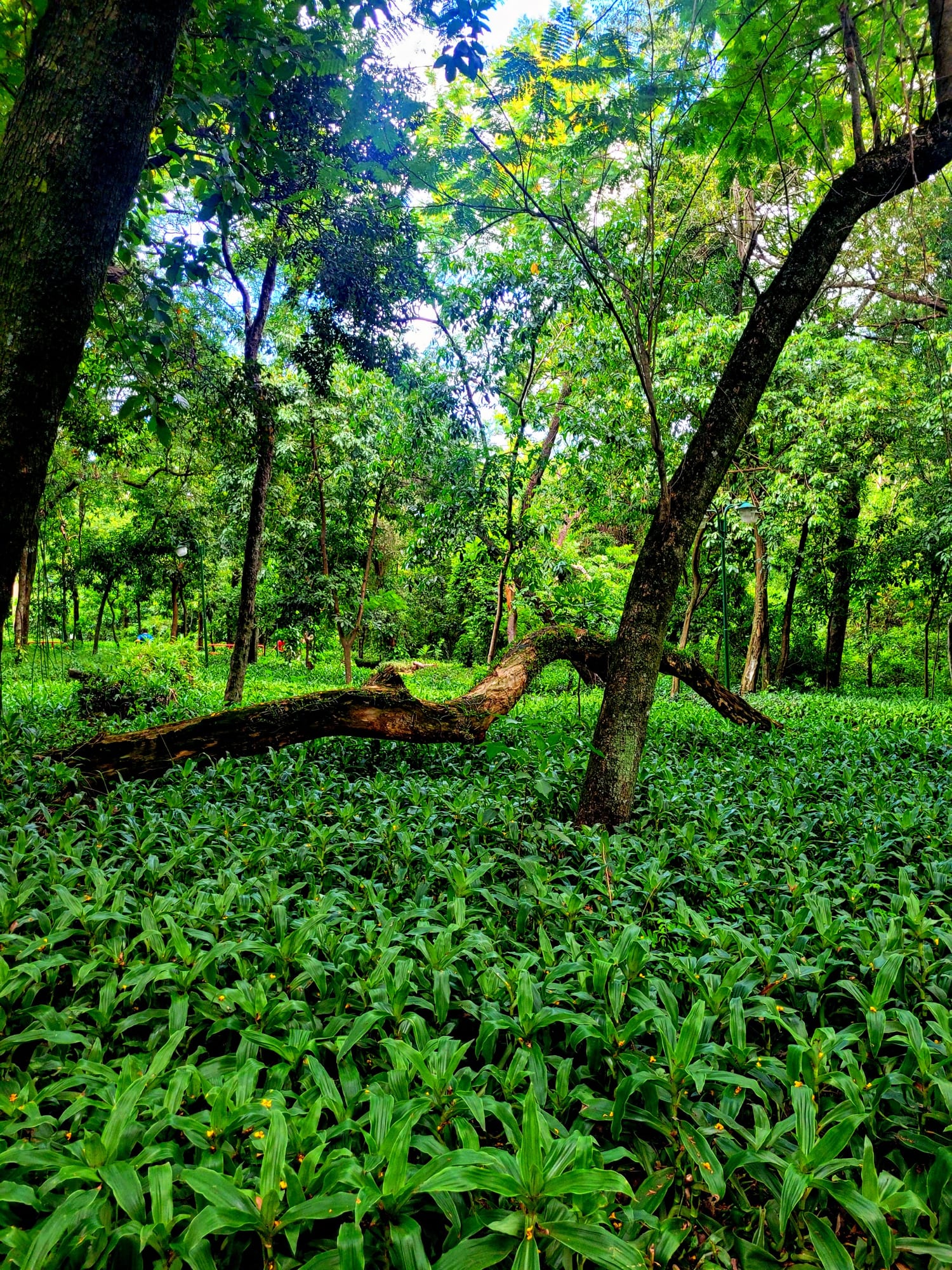
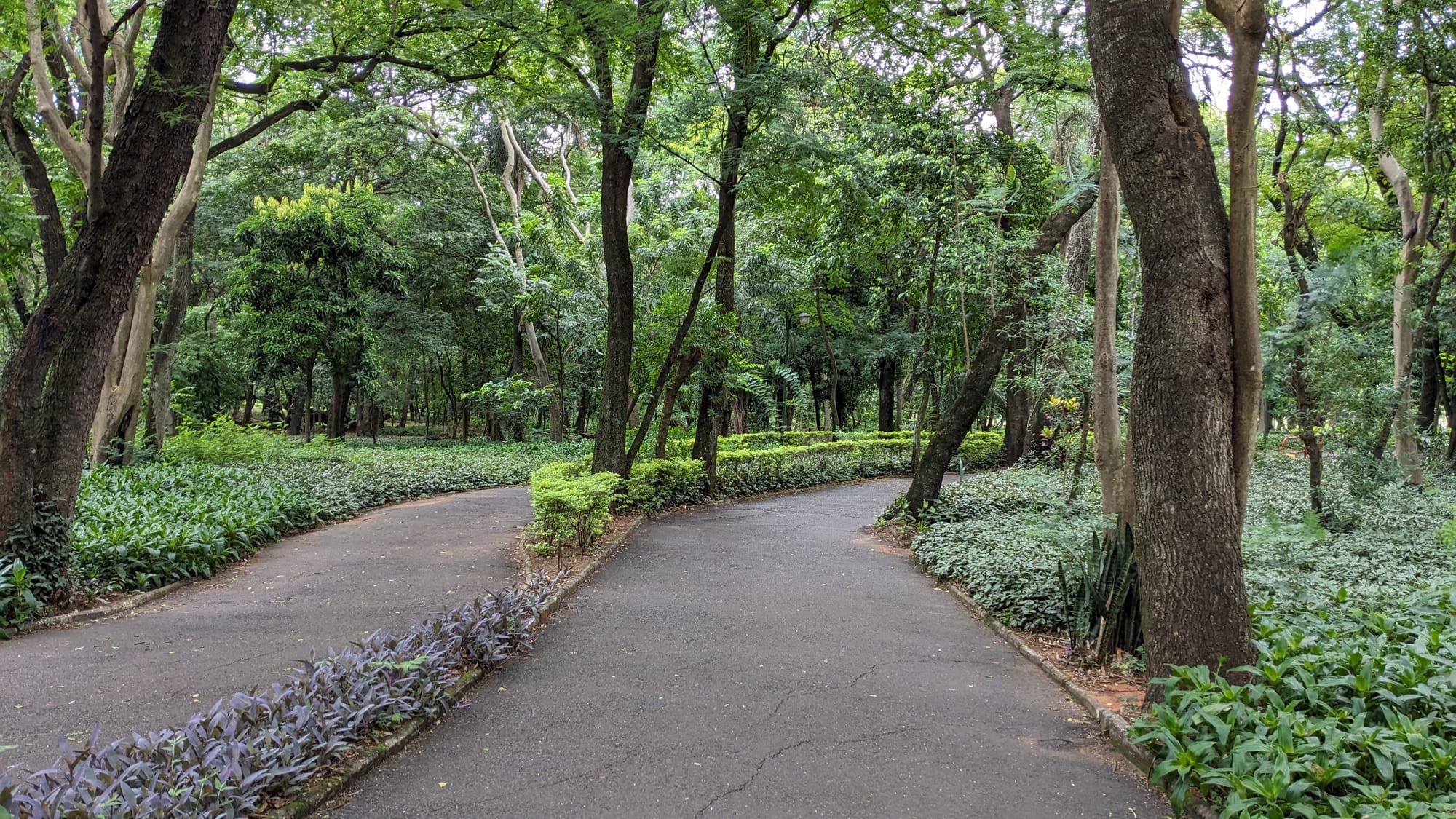
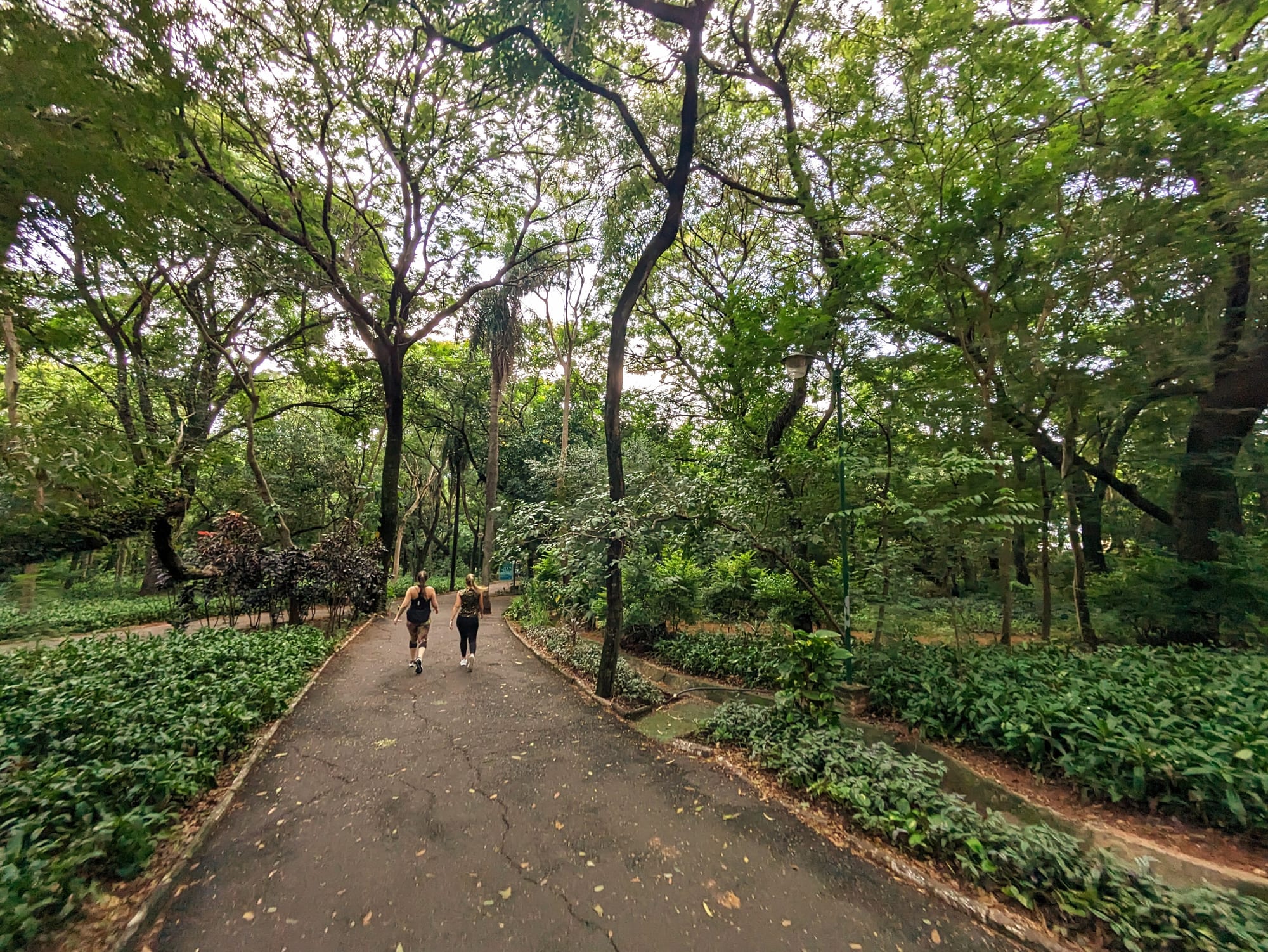
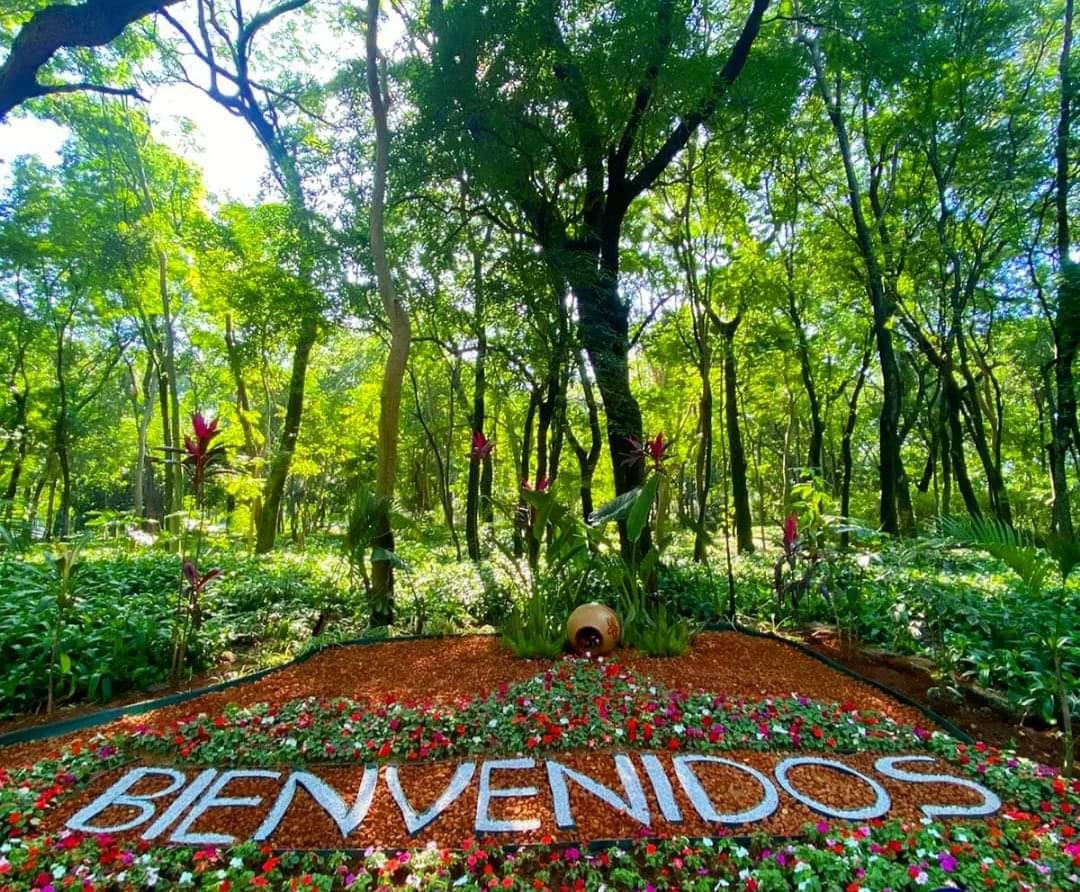
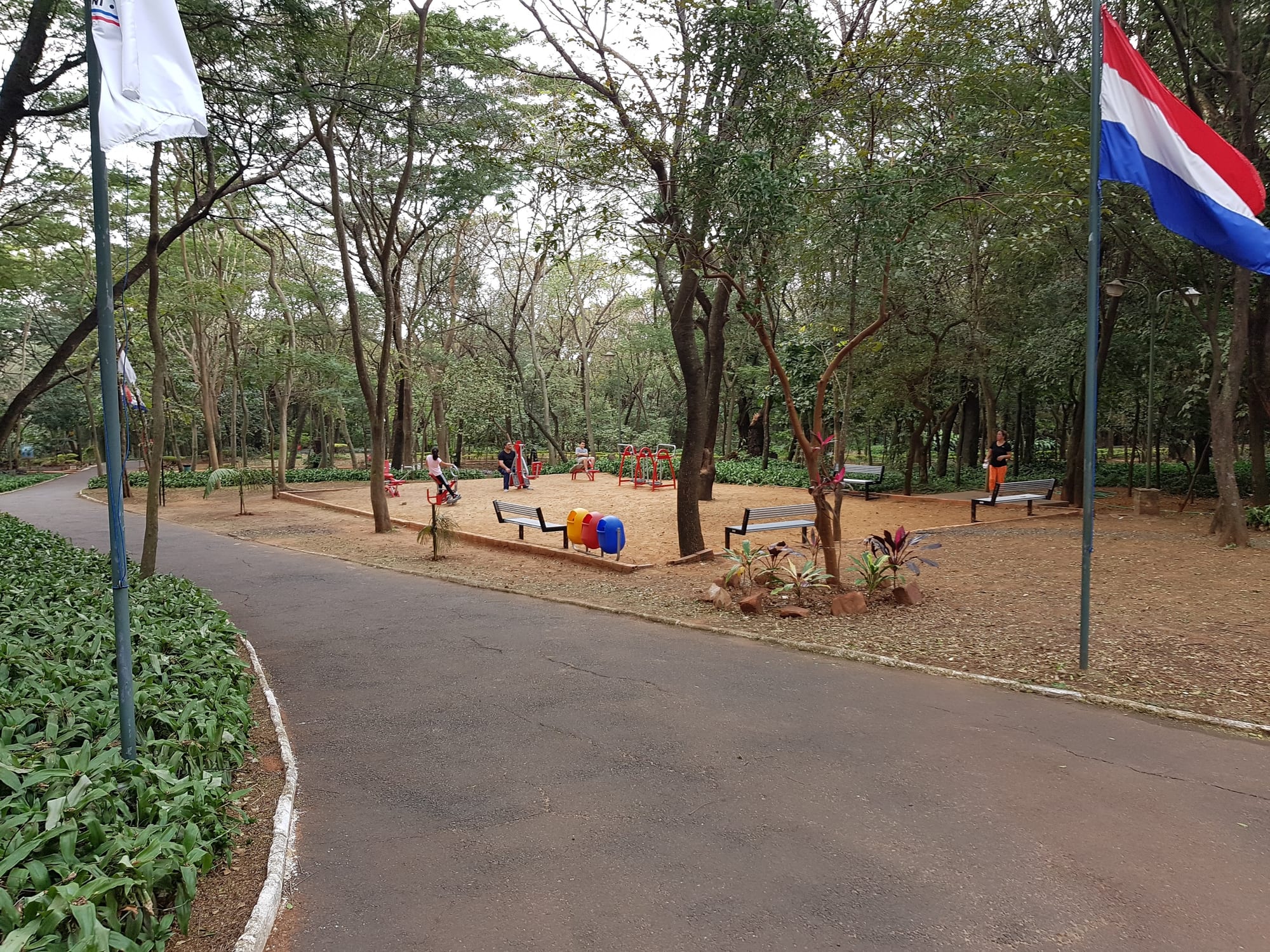
The park is dominated by trees, lawns and flower beds that give continuous shade during Asunción's hot afternoons. The tree canopy lowers surface temperature and forms a cool node within the urban heat island.

City wildlife

Green space attracts birds, insects and small urban animals. Watching sparrows, pigeons and pollinators among the flower beds is a simple entry point to urban biodiversity.

Microclimate and rainwater

Vegetation and permeable ground help retain rain, recharge soil moisture and improve local air quality. This low-intervention management fits the ecological meaning of a 'health park'.

Deep science

Deep science: Parque de la Salud across disciplines

As an independent non-profit guide, we go beyond the surface. The four modules below read the park through botany, therapeutic landscapes, microclimate and cultural geography.

01Botany

Botany and Asunción's urban ecology

Parque de la Salud is more than 'trees and grass'. Through urban ecology it reads as a living sample embedded in Asunción's dense fabric — a preserved urban remnant of the South American Atlantic Forest (Bosque Atlántico).

Native vegetation and species diversity

The park preserves native Paraguayan tree communities, including the Tajy — the pink trumpet tree (Lapacho), among Paraguay's national trees. Under the humid subtropical climate these trees follow clear phenology: a concentrated flowering from late dry season into spring, feeding pollinators and adapting well to local soils.

An urban biological corridor

Together with green spaces such as the Jardín Botánico, the park forms a migration corridor and refuge for urban wildlife — birds, pollinators and small mammals. In a capital of concrete blocks, this continuous green acts as a biodiversity 'stepping stone'.

Balancing native and introduced species

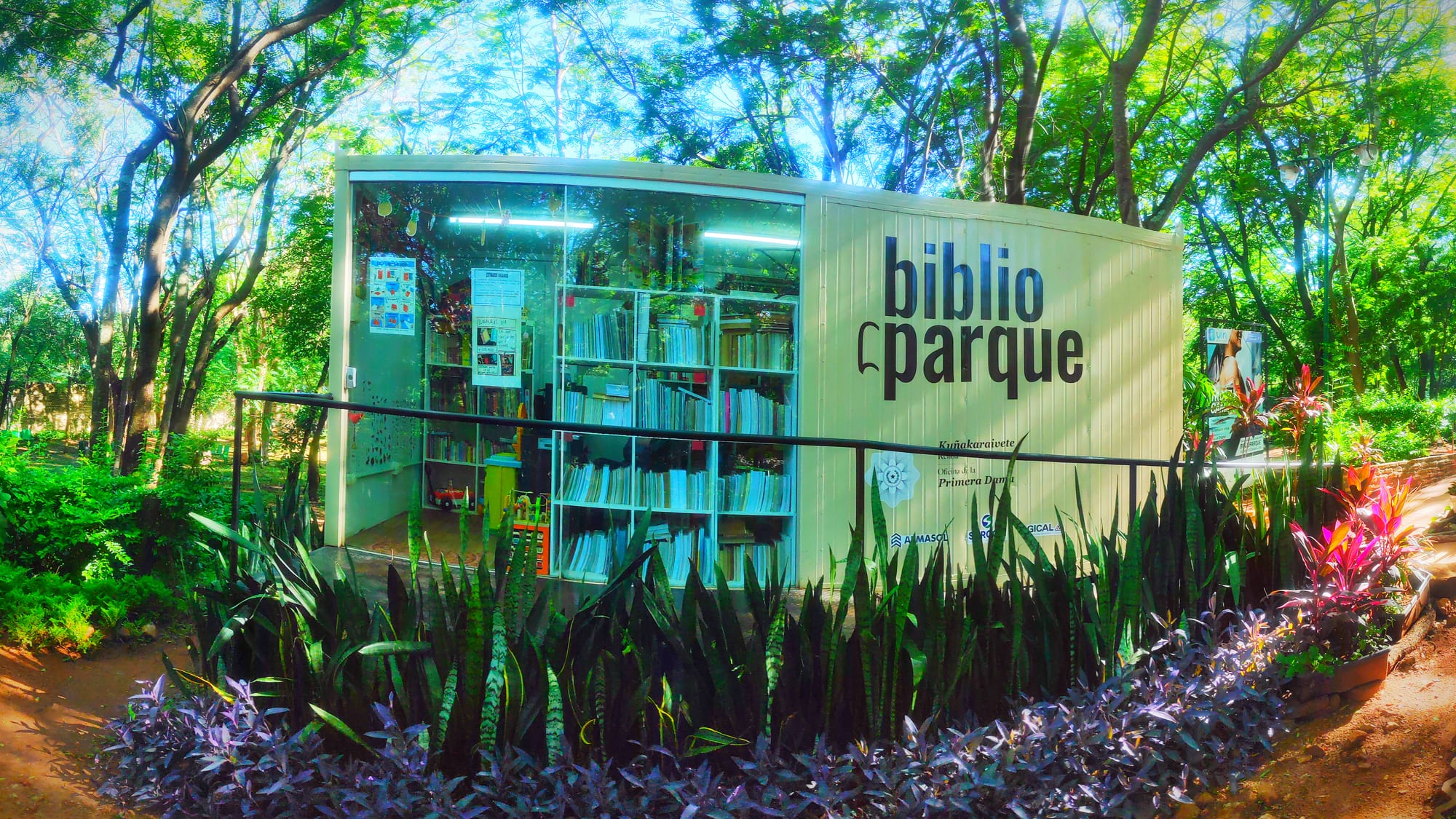
As a managed urban park, its vegetation system must actively prevent invasive species and keep native communities healthy. An on-site nursery (Vivero) propagates trees, ornamentals and native medicinal plants, and botanical labels along the paths are an entry point to public nature literacy.

02Healing landscapes

Healing landscapes and medical architecture

The word 'Salud' is not decoration. Two threads — environmental psychology and public-health history — reveal the deeper logic of the park's design.

Therapeutic garden design

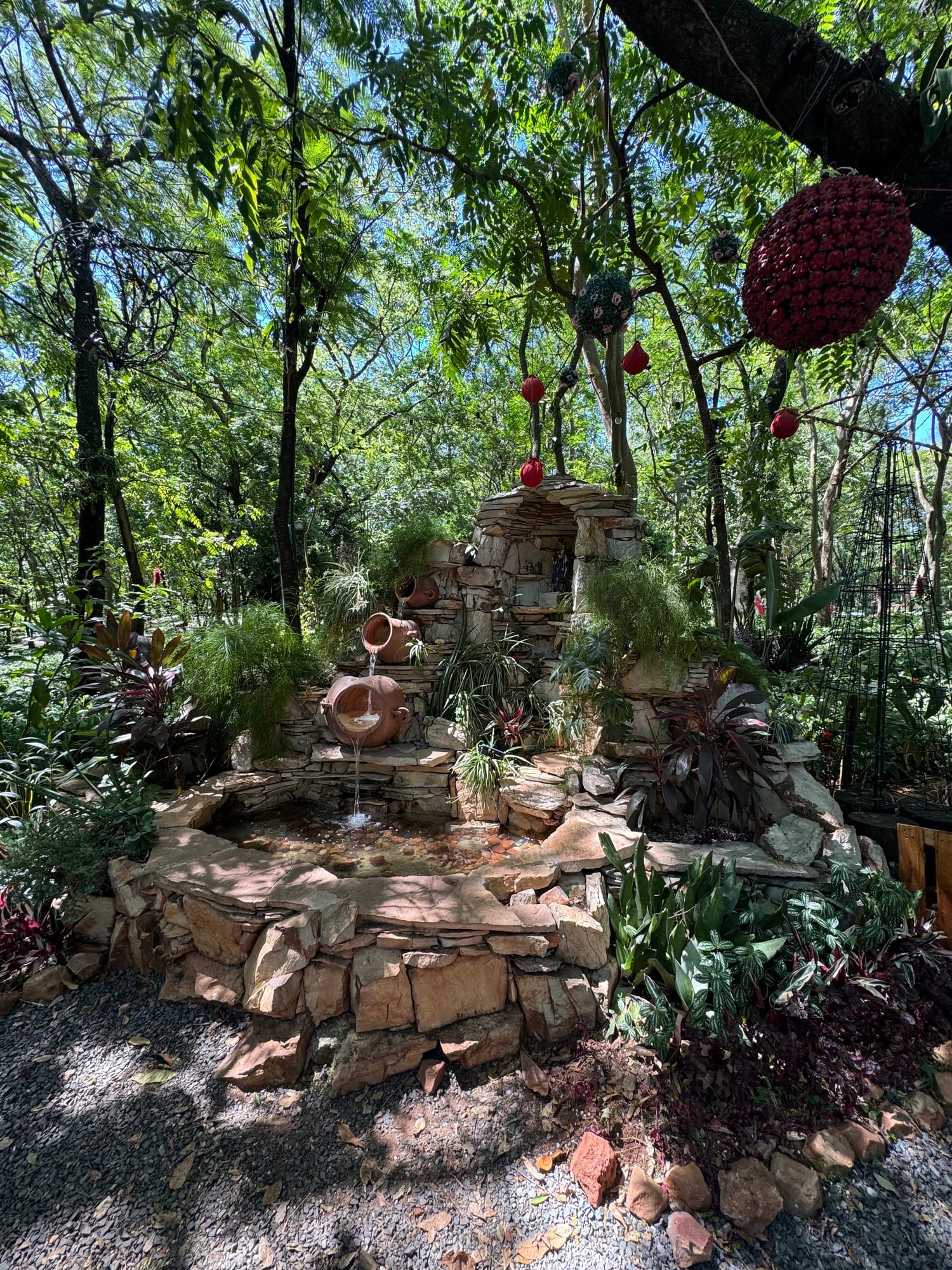
Path materials, colour palettes, aromatic plants and the sound of nearby water are arranged by environmental-psychology principles to lower anxiety, heart rate and blood pressure for recovering patients and visitors. This is therapeutic-landscape practice that treats nature as 'passive medicine'.

From 'cure' to 'prevention'

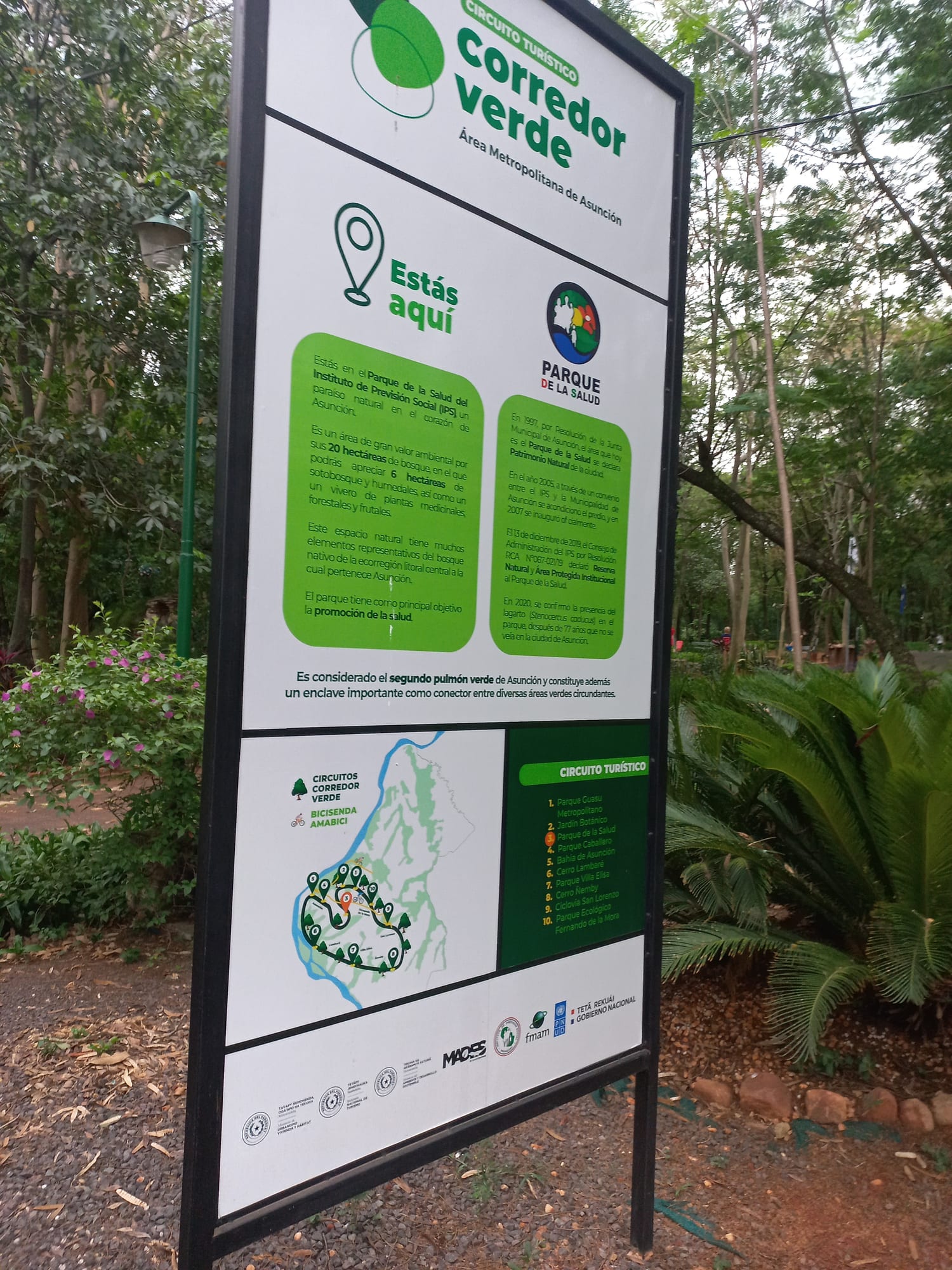
Inaugurated by Paraguay's social-security institute (IPS) on 14 December 2007 in Barrio Santo Domingo, beside the IPS Central Hospital, the park signals a shift in public health from 'disease treatment' toward 'prevention and wellbeing' made tangible in space.

A car-free space for recovery

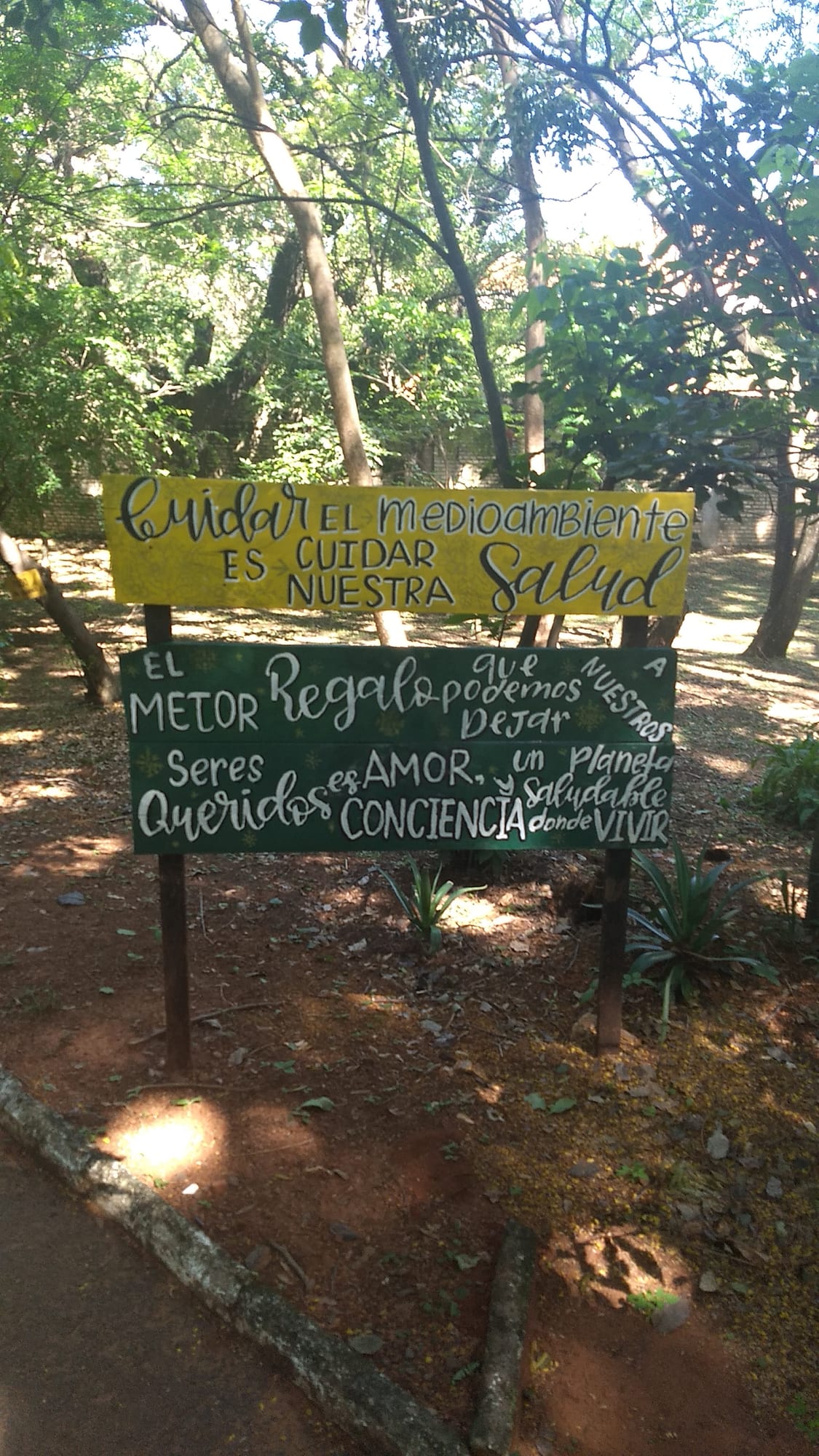
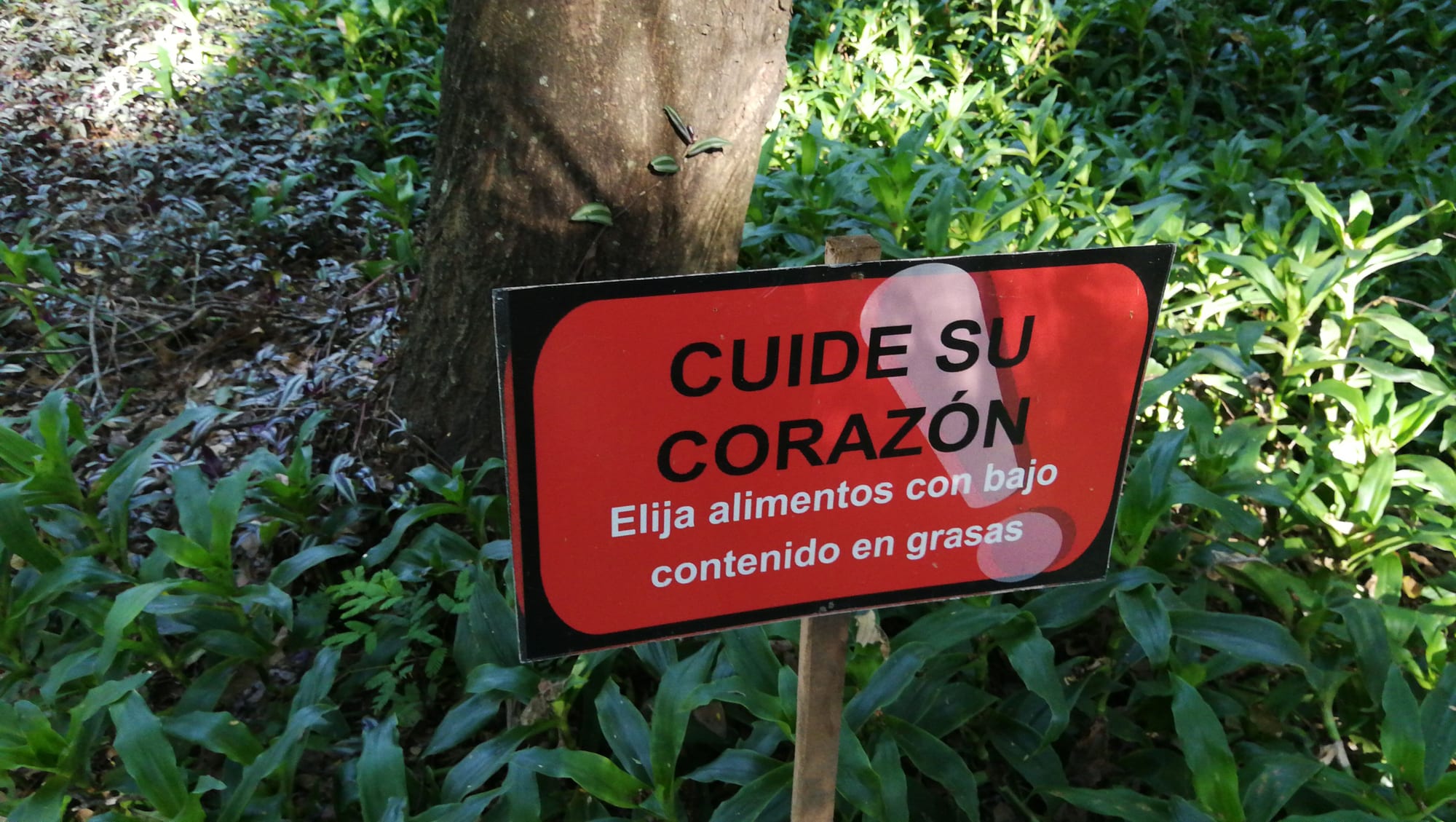
To protect recovering patients, members of the Vida Plena senior club and ordinary walkers, the park enforces strict pedestrian-only management — bicycles are banned. A nursing post (Puesto de enfermería) offers free blood-pressure, glucose and weight checks, weaving prevention into the green space.

03Microclimate

Microclimate and hydrology

As the second-largest green space after the Jardín Botánico, Parque de la Salud plays an 'infrastructure' role in the city's meteorology and water management.

Cooling the urban heat island

Dense canopy transpires continuously, carrying heat away and producing a clear 'cold-island' effect amid the hardened surrounding blocks, softening the high temperatures and discomfort of the urban heat island (UHI).

An urban sponge for stormwater

Asunción gets heavy summer storms. Permeable surfaces, lawns and deep-rooted plants absorb rainfall like a sponge, delaying surface runoff and easing pressure on the neighbourhood drainage system — a low-cost nature-based solution.

Soil and geological substrate

About 6 hectares of virgin natural vegetation (Vegetación natural virgen) are protected as a Natural Reserve (Reserva Natural) and urban natural heritage (Patrimonio Natural) by the municipality and IPS. The deep soil layer and root network are the geological basis for its ecological and hydrological function.

04Linguistics

Linguistics and local cultural geography

Pairing Spanish with Guaraní (Avañe'ẽ) etymology while explaining plants and animals lets us see the deeper indigenous understanding of nature.

Nature cognition in two languages

In Guaraní the pink trumpet tree is called Tajy — such indigenous words often condense long observation of a species' phenology, uses and ecology. Bilingual plant labels are both language preservation and a richer form of science communication.

Pre-industrial land use

Before the IPS health campus and the park, this land sat at the expanding edge of Asunción's urban fabric. Tracing its change from natural substrate to institutional green space is an essential page of local geographical history.

The cultural meaning of urban green

When a park is named 'Park of Health', it carries three intertwined narratives — public health, civic life and an indigenous language. This cross-disciplinary 'sense of place' is exactly what deep science communication hopes to convey.

As a non-profit attraction guide, this site prioritizes location, environmental context, transport, on-site photos, and official references over booking prompts or promotional language.
Experience

Walking the park: spatial sequence

Parque de la Salud is not a remote destination but a continuous green woven into city blocks. Reading its sequence helps you plan a calm walk and rest.

Stage 1 · City corner

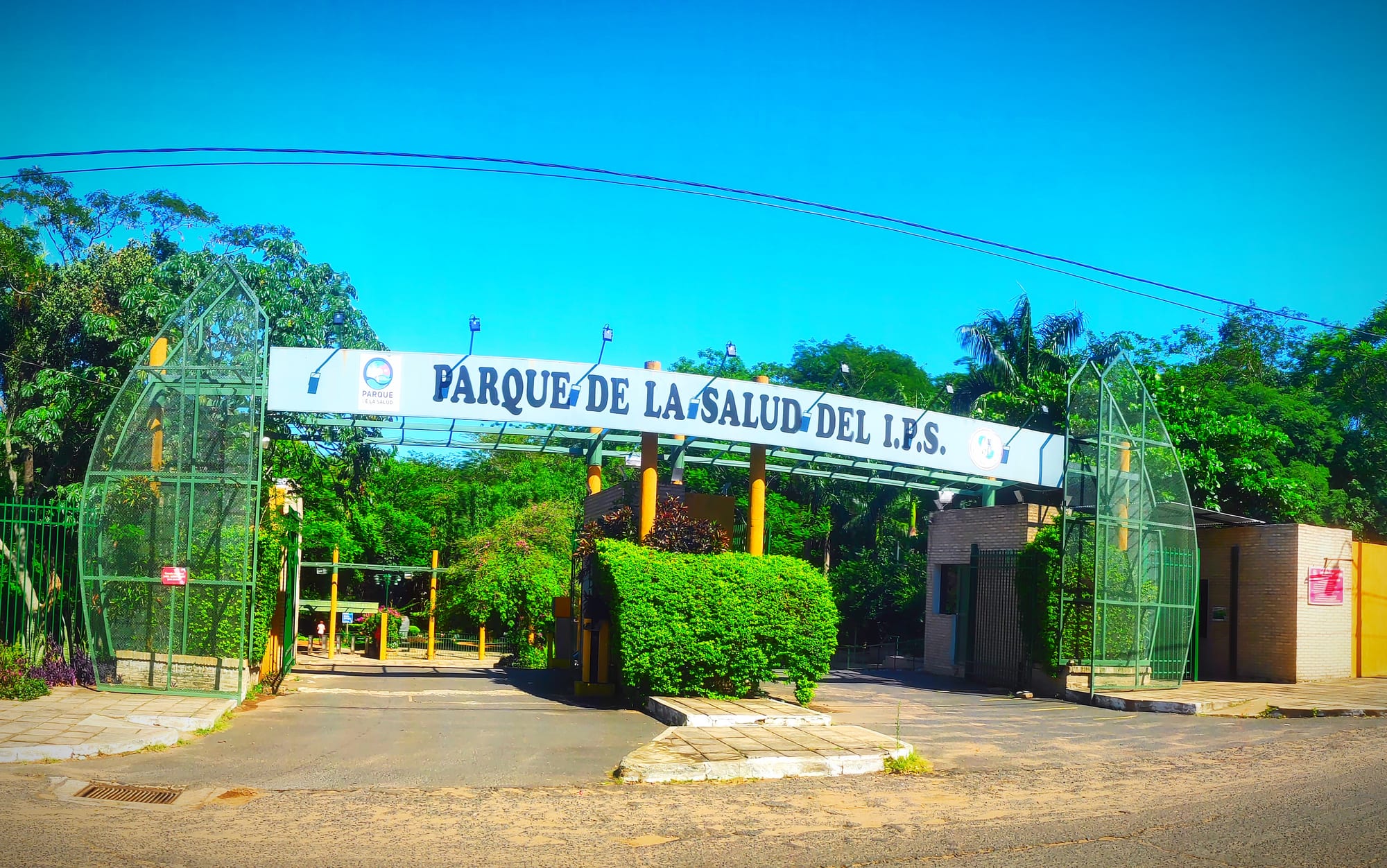
Entrance and tree-lined avenue

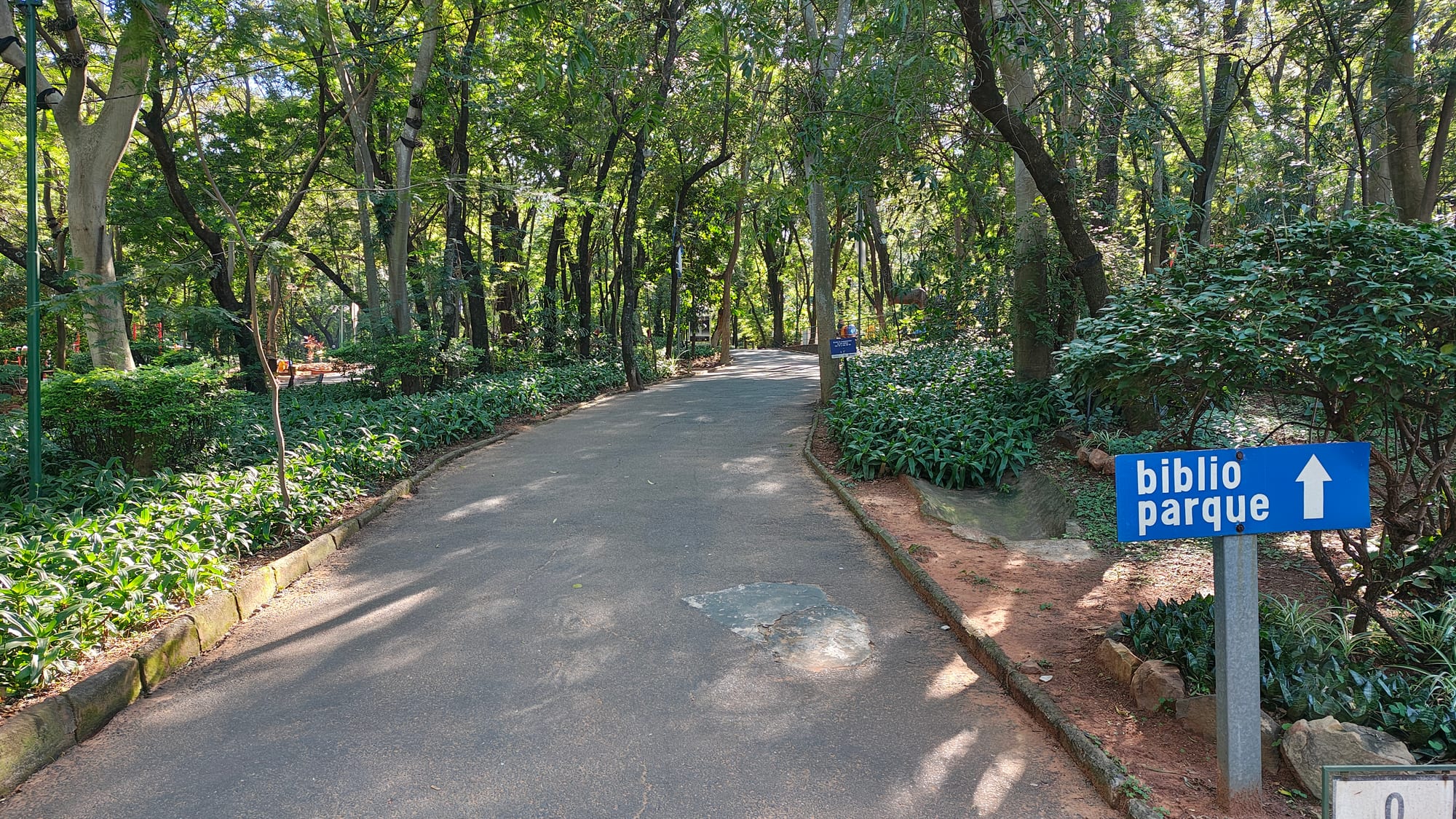
Enter from the surrounding blocks into a shaded promenade that links the health campus with the open lawn. Early morning and dusk are the gentlest times.

Stage 2 · Core green

Central lawn and gardens

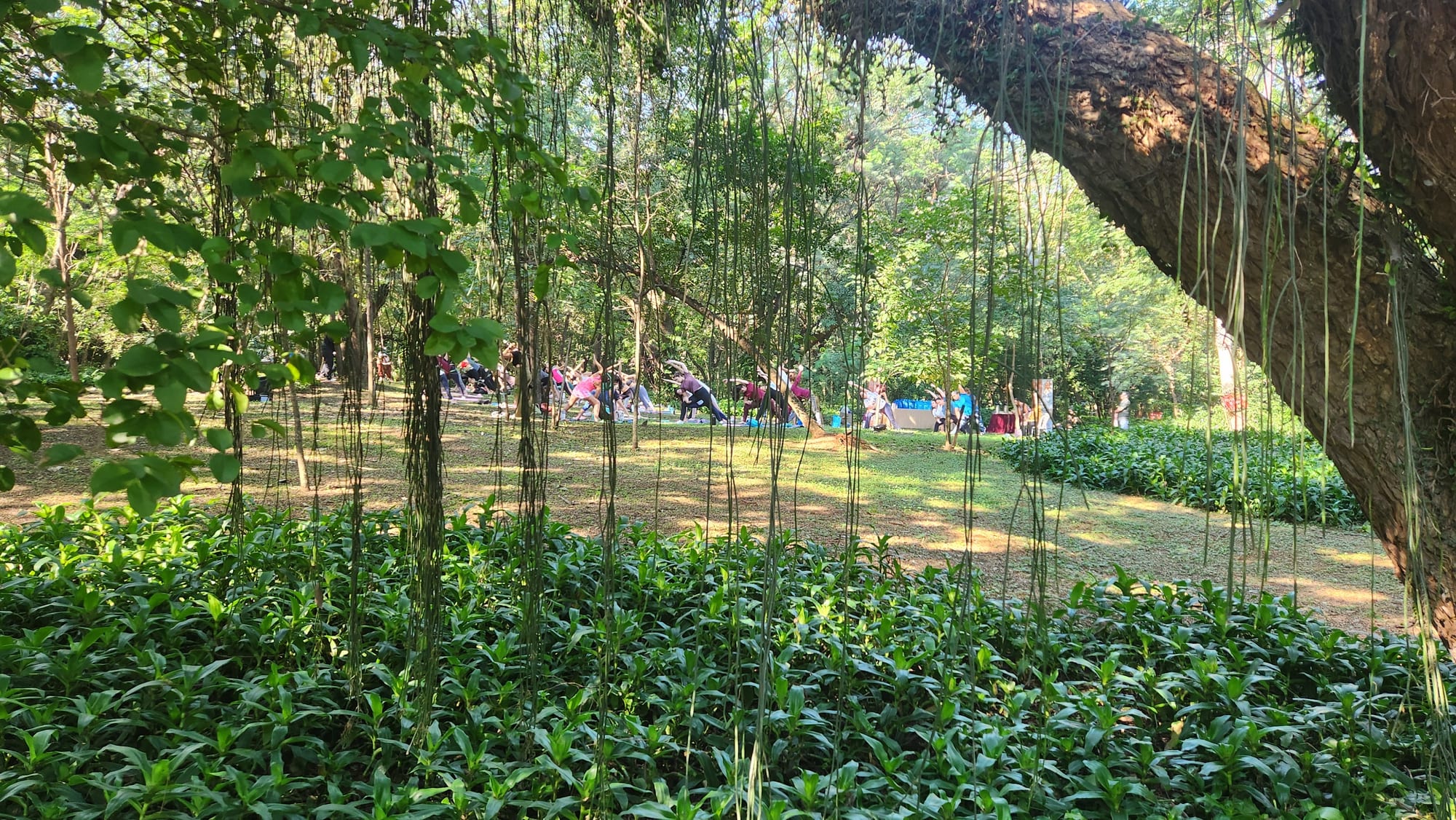
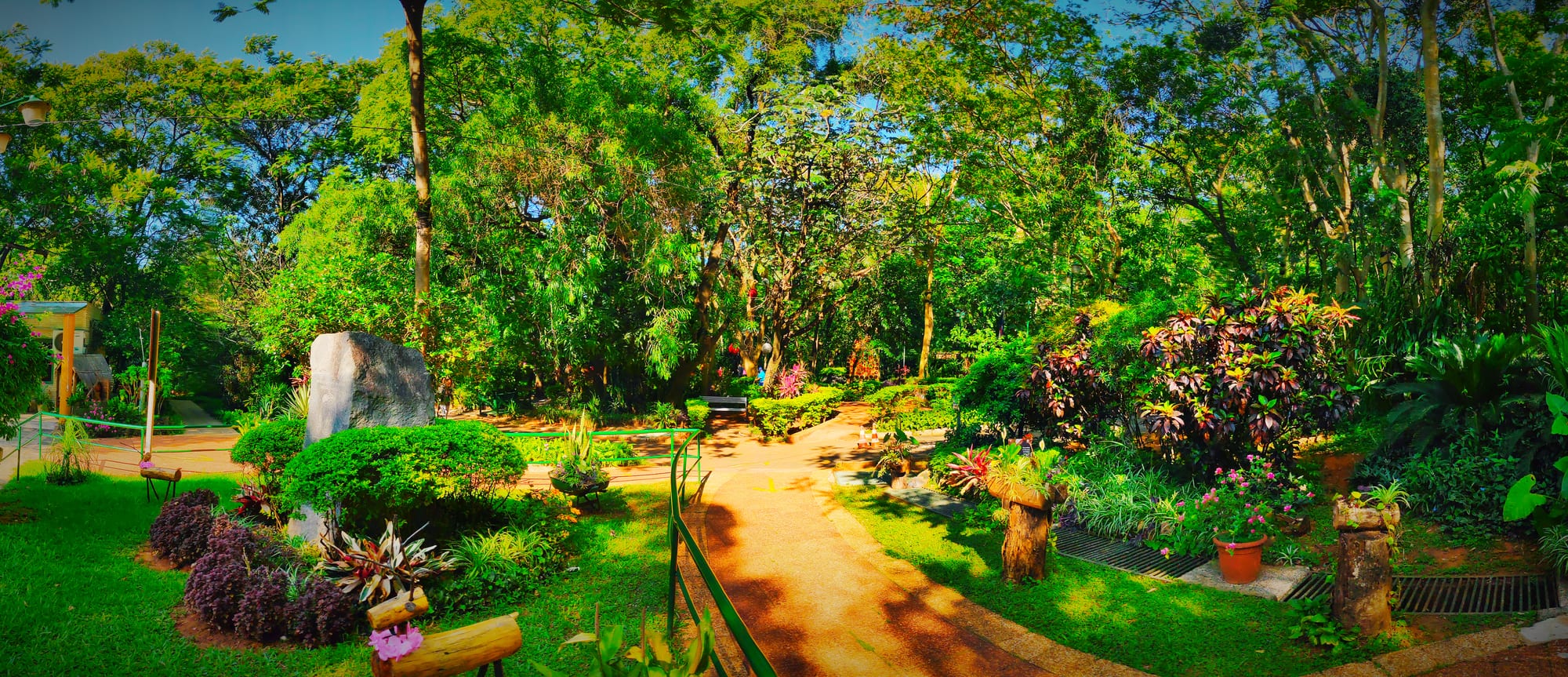
Follow the path to the central lawn and flower beds—good for a picnic mat, children at play, or quiet reading. The open space is also used for community events.

Stage 3 · Under the trees

Rest corners and return

The park edge has benches and shaded spots to look back at the city fabric before returning the same way. The route is flat and accessibility-friendly for all ages.

Practical info

How to get here

Parque de la Salud is in central Asunción. Usually you first reach the city centre, then finish with a short walk or transfer.

Regional airport

The nearest airport is Silvio Pettirossi International (ASU) in Asunción, in the Luque area of the metro; to the park takes tens of minutes by car.

Self-drive

From the centre, follow city roads to Doctor Manuel Peña and Augusto Roa Bastos; the park is woven into the blocks with street parking around it.

Bus plus walk

Several city bus lines pass the Hospital de Clínicas area; alight and walk to the park. Check live local info for lines and timetables.

Taxi and rideshare

Taxis and rideshare apps (such as Bolt and Uber) cover the city and drop you at the park's corner—easiest for families with seniors or children.

Basic spatial and geographic data

The structured data below summarizes Parque de la Salud's name, city, address, climate and management to help visitors read the place geographically.

Measure
Name
Core Data
Parque de la Salud
Notes
'Park of Health' in Spanish
Measure
City
Core Data
Asunción
Notes
Capital of Paraguay
Measure
Address
Core Data
Doctor Manuel Peña, Augusto Roa Bastos y
Notes
Postal code 8000
Measure
Plus Code
Core Data
PCFC+P4
Notes
Central Asunción
Measure
Type
Core Data
Urban park / public green
Notes
For residents and visitors
Measure
Managed by
Core Data
IPS (Instituto de Previsión Social)
Notes
Beside the IPS health campus
Measure
Climate
Core Data
Humid subtropical
Notes
Hot rainy summer, mild winter
Measure
Visitor rating
Core Data
4.7 / 5
Notes
About 6,404 public reviews

Climate and best time to visit

Away from river and sea, the real value of a city park lies in daily light and seasonal rhythm. Understanding them makes a visit more comfortable.

Subtropical seasons

Asunción has a humid subtropical climate. Summer (roughly November to March) is hot and rainy; winter (roughly June to August) is mild and dry. The cooler dry season is often better for longer outdoor time.

Best hours of the day

Early morning and dusk are the most pleasant and softly lit—good for walking and photography. Midday sun is strong; stay in shade and hydrate.

Light and photography

Morning side-light gives the tree shadows and lawn more depth; the golden hour at dusk suits the city skyline. For photography, timing often matters more than 'whether it is sunny'.

Plan your visit

Best timing

For walking and photography, prefer early morning or late afternoon. The cool season (roughly June to August) is more comfortable for longer stays.

Green and rest

In the morning, relax on the central lawn and flower beds; in the afternoon stay under the tree canopy. Midday sun is strong, so hydrate and use shade.

Suggested duration

Including a walk and rest, 1–2 hours is comfortable; with the nearby IPS campus or city blocks, allow half a day.

On-site safety

Urban park means sun protection and water; watch heat and thunderstorm notices; carry some cash for street vendors; keep valuables with you.

FAQ

Common geography and travel questions

To help you make informed travel decisions, we have organized the most common questions into three core dimensions based on geographical conditions and visitor feedback:

1. Geography and place

What kind of place is Parque de la Salud?+

It is an urban public park / green space next to the IPS health campus, combining a therapeutic natural setting with civic recreation rather than a commercial amusement venue.

Where in Asunción is it?+

In the central city, at Doctor Manuel Peña and Augusto Roa Bastos (postal code 8000); locate it with Plus Code PCFC+P4.

What is its natural value?+

Trees, lawns and flower beds provide shade, habitat and rain retention—a small sample of urban ecology that fits the 'health park' idea.

2. Transport and access

How do I get from the airport?+

The nearest airport is Silvio Pettirossi International (ASU) in Asunción; reach the park by city road or rideshare in tens of minutes.

Is public transport convenient?+

Several city bus lines pass the Hospital de Clínicas area; alight and walk. Check live local info for lines and timetables.

Driving and parking?+

The park sits within city streets with block parking; spaces are limited at peak times, so allow walking time and watch one-way and paid periods.

3. Safety and visit tips

Good for seniors and children?+

Paths are flat and accessibility-friendly, good for family walks; children should use the lawn and supervised areas, with sun and hydration care.

Worried about weather?+

Summer afternoons bring heat and thunderstorms; prefer morning or dusk and bring water and sun protection; winter is more comfortable but a light layer helps.

What facilities are on site?+

Mostly open lawn, paths, benches and shade; food and medical support are in surrounding blocks and the IPS campus—bring your own water.